
Yes, a tooth that has had root canal treatment can become infected again, even years later. A new problem may allow bacteria to enter the tooth, or an earlier infection may never fully resolve.
These are different situations, and neither automatically means the original treatment was performed incorrectly. They also do not automatically mean the tooth must be removed. Depending on the findings, additional treatment may help preserve it.
Recurring pain, swelling, or a bump on the gums deserves attention, but symptoms alone cannot establish the cause. A crack, bite problem, or another dental condition can produce similar discomfort.
At Gainesville Dental in Gainesville, TX, we help patients understand what is happening and discuss practical next steps without pressure. An examination is the starting point for deciding whether the tooth needs further care.
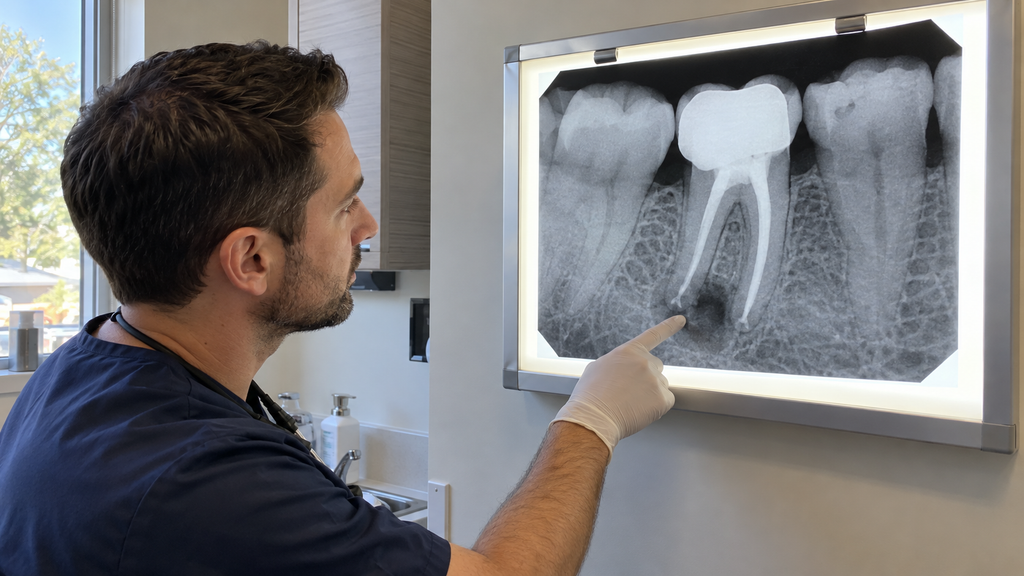
Why Can a Previously Treated Tooth Develop an Infection?
Root canal treatment removes infected or inflamed pulp, the tissue containing nerves and blood vessels inside a tooth. The canals are cleaned, disinfected, filled, and sealed. An appropriate restoration then helps protect the remaining tooth structure.
Treatment does not make the tooth immune to decay or damage. Problems can develop for several reasons.
New Decay
The natural tooth structure around a crown or filling can still develop a cavity. If decay progresses and compromises the seal protecting the canals, bacteria may enter the treated tooth.
A crown covers and protects a tooth, but it does not eliminate the need for brushing, cleaning between teeth, and professional examinations.
A Loose or Damaged Restoration
A loose, cracked, or broken crown or filling can create an opening for bacteria. Delaying the recommended permanent restoration after root canal treatment can also leave the tooth vulnerable.
Tell your dentist if a restoration breaks, moves, or comes off. Avoid chewing on the affected tooth until you receive guidance.
Complex Canal Anatomy
Some teeth have narrow, curved, or additional canals that are difficult to locate and treat. Bacteria remaining within the canal system can contribute to persistent infection.
This differs from a new infection entering a previously healed tooth. Your treatment history, examination, and imaging help the clinician assess the likely explanation.
A Crack or Fracture
A crack can provide a pathway for bacteria. Teeth that have lost substantial structure may also be vulnerable to fracture.
The location and extent of a crack affect treatment options. Some teeth can be restored, while certain fractures make preservation unlikely. Cracks are not always visible on standard dental X-rays, so additional examination or testing may be needed.
What Changes Should You Watch For?
Arrange an evaluation if you notice:
- Pain that returns after the tooth had been comfortable.
- Persistent tenderness when biting or chewing.
- Swelling or soreness near the treated tooth.
- A pimple-like bump on the nearby gum.
- Drainage or an unpleasant taste coming from the area.
These changes can occur with infection, but they are not proof of it. A bite that places too much pressure on the tooth, a crack, gum problems, or a neighboring tooth may also need consideration.
Recent treatment adds another factor. Some temporary tenderness can occur after a procedure. Follow your aftercare instructions and contact the treating office if pain worsens, swelling develops, or symptoms differ from what you were told to expect.
Can There Be an Infection Without Pain?
Yes. A previously treated tooth can have a problem without causing noticeable pain.
Although the pulp has been removed, the tissues around the roots still contain nerves and can become painful. Conversely, little or no discomfort does not establish that those tissues are healthy.
Keep recommended follow-up visits even when the tooth feels normal. Symptoms are only one part of assessing its condition.
How Does a Dentist Find the Cause?
An evaluation usually begins with your symptoms and treatment history. Be ready to explain when the root canal was performed, when the tooth received its restoration, and whether it ever became comfortable afterward.
If another office treated the tooth, previous records and X-rays may be useful. Mention any recent dental work, injuries, or changes in how your teeth meet.
The examination may include checking the crown or filling, looking for decay or cracks, assessing tenderness, evaluating the bite, and examining the surrounding gums. Nearby teeth may also need testing to identify where symptoms originate.
Dental X-rays, when indicated, help assess the roots and surrounding bone. Findings must be interpreted alongside the examination, treatment timing, and symptoms. A single image or symptom does not automatically establish reinfection or determine treatment.
What Treatment Might Be Recommended?
The recommendation depends on the cause, remaining tooth structure, supporting tissues, and whether the tooth can be restored.
Retreatment and root-end surgery may require referral to an endodontist, a specialist in treating the inside of teeth. An endodontic evaluation can help clarify whether either procedure is appropriate for your tooth.
Root Canal Retreatment
Retreatment involves reopening the tooth, removing previous canal filling material, and cleaning and disinfecting the canals again. The clinician may look for additional anatomy before refilling and sealing the canals.
Access can require working through or removing an existing crown or other restoration. A suitable restoration is needed afterward to protect the tooth.
Retreatment may be considered when the source of the problem can be addressed through the canals. Its suitability depends on the individual findings.
Root-End Surgery
An endodontist may consider root-end surgery, also called an apicoectomy, when nonsurgical retreatment is unsuitable or in selected cases where further treatment is needed.
The procedure involves accessing the root tip, removing affected tissue and a small portion of the root end, and sealing the end of the canal. It is not necessary for every recurring infection, and an evaluation determines whether it is appropriate.
Restoration Repair or Replacement
A damaged crown or filling may need repair or replacement. If infection has reached the canal system, however, restoring the outside of the tooth alone may not address its source.
The plan may therefore involve both endodontic treatment and restorative care.
Extraction When Preservation Is Not Appropriate
A dentist may recommend tooth extraction if the tooth cannot reasonably be saved, such as with certain fractures or extensive structural damage.
If removal is necessary, replacement options may include a dental implant, bridge, or partial denture. The appropriate option depends on your oral health, preferences, and treatment needs.
Where Do Antibiotics Fit?
Antibiotics alone generally do not eliminate an infection’s source inside a tooth. Dental treatment remains important.
A clinician may prescribe antibiotics when indicated, including when infection causes systemic symptoms such as fever or feeling unwell. The decision depends on the findings and your medical history. Do not take leftover antibiotics or delay an examination because symptoms temporarily improve.
How Can You Help Protect the Tooth?
Complete the recommended permanent restoration after treatment. A crown is often appropriate for back teeth or teeth with substantial structural loss, but not every treated tooth needs the same restoration.
Daily care and follow-up also matter:
- Brush twice daily with fluoride toothpaste.
- Clean between your teeth every day with floss or another recommended tool.
- Keep recommended dental examinations so decay and restoration problems can be assessed.
- Report a loose crown, broken filling, or recurring discomfort promptly.
- Avoid chewing ice or using your teeth to open packaging.
Ask for practical guidance if cleaning around the restoration is difficult. These steps support oral health, but they cannot guarantee that a tooth will never need additional treatment.
When Should You Seek Prompt Care?
Contact a dental professional promptly for returning pain, persistent biting tenderness, swelling, drainage, or a gum bump. Do not wait for severe pain before arranging an assessment.
Fever with dental symptoms or significant facial swelling requires urgent assessment. Seek emergency medical care for difficulty breathing or swallowing, or swelling spreading toward the eye or neck.
Do not try to drain a swollen area yourself. Home measures may ease discomfort temporarily, but they do not replace evaluation and treatment of the underlying problem.
Get Clear Answers About Your Previously Treated Tooth
At Gainesville Dental, we offer root canal therapy and restorative care with clear explanations and practical recommendations. We can evaluate your concerns and discuss the appropriate next step, including whether specialist assessment is needed.
Schedule a Dental Evaluation if a previously treated tooth has become painful or you have noticed another change. We will help you understand your options and participate in decisions about your care.