
Welcome to Gainesville Dental

Root Canals

Relief for Tooth Pain and Dental Infection

A severe toothache can make it hard to eat, sleep, work, or get through your day. In many cases, tooth pain is a sign that the inside of the tooth is inflamed or infected. At Gainesville Dental, we provide root canals in Gainesville, TX to help relieve pain, treat infection, and save natural teeth whenever possible.

Led by Dr. Navjot Randhawa, our team takes a calm, practical approach to endodontic treatment. We explain what is happening inside the tooth, why a root canal may be recommended, and what you can expect during care.

Root canal treatment may sound intimidating, but the goal is simple: remove the infected or inflamed tissue inside the tooth, clean the inner canals, and protect the tooth so it can continue functioning.

asian dentist holding dental implant artificial
cropped FINAL Gainesville Dental.png

Need To Schedule OR Have A Question?

Contact Us

What Is a Root Canal?

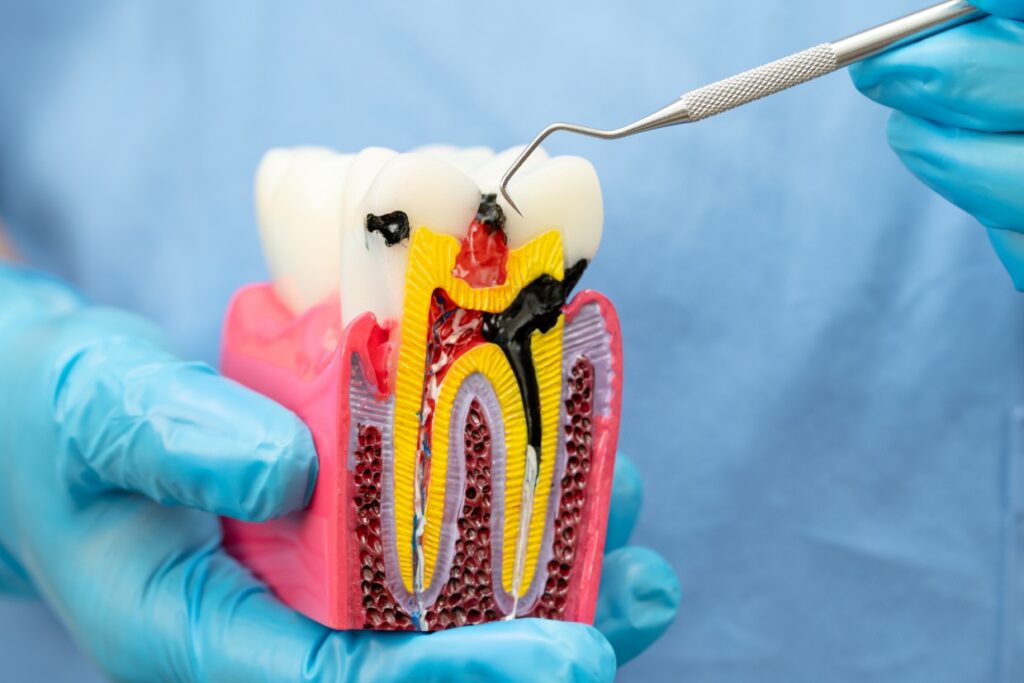
A root canal is a dental procedure used to treat infection or inflammation inside a tooth. Inside each tooth is soft tissue called pulp, which contains nerves and blood vessels. When the pulp becomes infected or damaged, it can cause pain, swelling, sensitivity, or an abscess.

During root canal treatment, the infected or inflamed pulp is removed. The inside of the tooth is cleaned, shaped, and sealed. In many cases, a dental crown is recommended afterward to protect the tooth and restore chewing strength.

A root canal may help:

  • Relieve severe tooth pain
  • Treat infection inside the tooth
  • Save a natural tooth from extraction
  • Reduce sensitivity caused by nerve damage
  • Restore comfort when biting or chewing
  • Protect surrounding teeth from shifting
  • Support long-term oral health

The goal is to keep your natural tooth whenever it can be restored safely and predictably.


Signs You May Need a Root Canal

Not every toothache requires a root canal, but certain symptoms may point to infection or nerve damage. Some patients have intense pain, while others have mild symptoms that gradually get worse.

You may need a root canal if you have:

  • Severe or lingering tooth pain
  • Pain when biting or chewing
  • Sensitivity to hot or cold that does not go away quickly
  • Swollen or tender gums near one tooth
  • A pimple-like bump on the gums
  • Darkening or discoloration of a tooth
  • A cracked or broken tooth
  • Deep decay
  • A dental abscess
  • A bad taste or odor near the painful tooth

If you are experiencing swelling, severe pain, or signs of infection, call Gainesville Dental as soon as possible. Early treatment may help save the tooth and prevent the infection from spreading.


Why Saving Your Natural Tooth Matters

When a tooth is badly infected, extraction may seem like the fastest solution. In some cases, removal is necessary. When the tooth can be saved, root canal treatment may help preserve your natural bite, chewing function, and smile.

Saving a natural tooth can help:

  • Maintain normal chewing ability
  • Prevent nearby teeth from shifting
  • Preserve your natural smile
  • Avoid the need for immediate tooth replacement
  • Maintain jaw and bite balance
  • Reduce the risk of added stress on other teeth

At Gainesville Dental, we will never pressure you into treatment. Dr. Randhawa will explain the condition of the tooth and help you understand the benefits, limitations, and alternatives.


What Causes a Tooth to Need a Root Canal?

A tooth may need root canal therapy when the inner pulp becomes damaged or infected. This can happen for several reasons, including untreated cavities, dental trauma, cracks, repeated dental work, or deep decay that reaches the nerve.

Common causes include:

  • Deep cavities
  • Cracked or fractured teeth
  • Dental injury or trauma
  • Large or failing fillings
  • Repeated treatment on the same tooth
  • Severe wear from grinding or clenching
  • Infection under an old crown
  • Untreated tooth decay

Once infection reaches the inside of the tooth, it will not heal on its own. Dental treatment is needed to remove the infection and protect the tooth.


What to Expect During Root Canal Treatment

Root canal treatment begins with an exam and digital X-rays to evaluate the tooth, root, and surrounding bone. Dr. Randhawa will explain what we see and review your treatment options before care begins.

Your root canal appointment may include:

  • Numbing the area for comfort
  • Creating a small opening in the tooth
  • Removing infected or inflamed pulp
  • Cleaning and shaping the inner canals
  • Sealing the inside of the tooth
  • Placing a temporary or permanent restoration
  • Planning a crown when needed

Most patients are relieved to learn that root canal treatment is designed to stop pain, not cause it. Our team works carefully to help you feel comfortable and informed throughout the visit.


Do Root Canals Hurt?

Root canals have a reputation for being painful, but modern treatment is focused on comfort and pain relief. The tooth and surrounding area are numbed before treatment begins. Many patients feel pressure or movement, but not sharp pain.

The discomfort people associate with root canals often comes from the infection itself, not the treatment. Once the infected tissue is removed and the tooth is treated, pain usually improves.

Some soreness after treatment is normal for a short time, especially when the tooth was inflamed or infected before the appointment. Our team will give you instructions for what to expect and when to call us.


Root Canals and Dental Crowns

Many teeth need a crown after root canal treatment, especially back teeth used for chewing. A tooth that needs a root canal is often already weakened by decay, cracks, large fillings, or infection. A crown helps protect the remaining tooth structure and restore strength.

A crown may be recommended after a root canal to:

  • Protect the tooth from cracking
  • Restore chewing function
  • Seal the tooth
  • Improve tooth shape
  • Strengthen a weakened tooth
  • Support long-term function

If a crown is needed, Dr. Randhawa will explain why and help you understand the next step in the process.


Root Canal vs. Tooth Extraction

A root canal and an extraction are both used to treat serious tooth problems, but they have different goals. A root canal is designed to save the natural tooth. An extraction removes the tooth completely.

A root canal may be recommended when the tooth can still be restored. An extraction may be needed when the tooth is too cracked, loose, infected, or damaged to save.

If a tooth must be removed, we can discuss replacement options such as a dental implant, bridge, or denture when appropriate. At Gainesville Dental, we focus on honest recommendations and will explain which option makes the most sense for your health and budget.


Emergency Root Canal Care in Gainesville, TX

Tooth pain can become urgent quickly. If you have severe pain, swelling, or signs of infection, Gainesville Dental makes every effort to accommodate emergency visits and same-day requests when our schedule allows.

During an emergency visit, we will evaluate the tooth, take X-rays if needed, and determine if root canal therapy, extraction, medication guidance, or another treatment is needed.

If you are in pain, call 940-275-0270. Our team will help you understand the next step.


Affordable Root Canals in Gainesville, TX

Gainesville Dental believes essential dental care should be accessible. We accept Medicaid and many PPO dental insurance plans, helping patients receive needed treatment with fewer financial barriers.

Coverage for root canals depends on your insurance plan, the tooth being treated, and the details of your case. Our team can help review your benefits, explain estimated costs, and answer questions before treatment begins when possible.

We want you to feel informed, respected, and confident about your care.


Honest Endodontic Care Without Pressure

At Gainesville Dental, we recommend treatment based on what your tooth needs. If a root canal can help save your tooth, Dr. Randhawa will explain why. If the tooth cannot be saved, we will explain that clearly too.

You can expect:

  • Straightforward explanations
  • Practical treatment options
  • No unnecessary upselling
  • Respect for your comfort and budget
  • Clear guidance before treatment begins
  • A focus on relieving pain and protecting your health

Our goal is to help you make the right decision for your smile with confidence.


Root Canals Near Downtown Gainesville

Gainesville Dental is located at:

817 North Grand Ave
Suite 103

Gainesville, TX 76240

Our office is convenient for patients from Downtown Gainesville, the Historic Home District, Gainesville West, Gainesville East, Sable Creek, Lake Ridge Estates, Black Hill Farm, Polaris Point, Lakeside Estates, and nearby Cooke County communities.

We are also close to Downtown Square, Frank Buck Zoo, NCTC Campus, Gainesville Shopping Center, and Liberty Crossing.


Schedule Root Canal Treatment in Gainesville, TX

If you have severe tooth pain, lingering sensitivity, swelling, or signs of infection, Gainesville Dental can help. Dr. Navjot Randhawa and our team provide root canals in Gainesville, TX with a focus on comfort, honest guidance, and saving natural teeth when possible.

Call 940-275-0270 to schedule your visit, or request an appointment online today.

Root Canals FAQs

What Is a Root Canal?
A root canal is a dental treatment used to remove infected or inflamed tissue from inside a tooth. The tooth is cleaned, sealed, and restored so it can continue functioning.
You may need a root canal if you have severe tooth pain, lingering sensitivity, swelling, a gum bump, pain when biting, deep decay, or a dental abscess. An exam and X-ray can help determine the cause of your symptoms.
Root canal treatment is designed to relieve pain caused by infection or inflammation. The area is numbed before treatment, and our team works carefully to keep you comfortable.
Many back teeth need a crown after root canal treatment because they are used heavily for chewing and may be weaker after infection or decay. Dr. Randhawa will explain if a crown is recommended for your tooth.
It depends on the condition of the tooth. A root canal may be the better option when the tooth can be saved. An extraction may be needed if the tooth is too damaged, cracked, or infected to restore.
Delaying treatment can allow infection to worsen and may increase the risk of swelling, severe pain, or tooth loss. If you think you have an infected tooth, call Gainesville Dental as soon as possible.
Yes. Gainesville Dental accepts Medicaid and many PPO dental insurance plans. Coverage for root canals varies by plan, and our team can help review your benefits before treatment when possible.

You can schedule a a root canal evaluation at Gainesville Dental, located at 817 North Grand Ave, Suite 103, Gainesville, TX 76240. Call 940-275-0270 to request an appointment.

Patient Reviews

What Our Patients Say

Real stories from real patients in the Gainesville community.